

Table of Contents
If your picky toddler has a deep love for, say, plain white crackers, but rejects literally everything else, you are experiencing a common phenomenon known as food jags. While frustration is understandable, there’s a gentle, research-backed solution that works: Food Chaining.
Food Chaining is a non-pressured method that builds a “bridge” between foods your child currently accepts (their “safe foods”) and new, challenging foods. Instead of introducing a brand-new food, you introduce foods that are only slightly different in one sensory quality—texture, flavor, color, or temperature. This makes the new food feel less scary to a hesitant eater.
Food Chaining leverages the science of gradual exposure and familiarity. For a picky eater, a raw carrot and a sweet potato might feel like two completely different planets. Food chaining finds the tiny galaxy between them.
The key to its success is adhering to the principle of the Division of Responsibility (DoR): You provide the food chain, and your child decides if and how much they explore it.
Here is the TinyPal step-by-step guide on how to apply Food Chaining to your toddler’s diet:
Start with a food your child reliably accepts (your “Anchor Food”). Be as specific as possible.
- Bad Example: “Waffles.”
- Good Example: “Eggo Homestyle Waffles, toasted to a medium crisp, served plain.”
Identify the specific sensory qualities of this safe food:
- Texture: Crisp, Smooth, Chewy?
- Taste: Sweet, Salty, Bland?
- Color: Yellow, White, Brown?
The first new food (the “bridge”) must be almost identical to the Anchor Food, changing only one single characteristic.
- Goal: Move from Accepted Food $\rightarrow$ Bridge Food
| Anchor Food (Accepted) | Change One Quality | Bridge Food |
| White Cheese Cracker | Change Shape | Same Cracker in a Different Shape (e.g., triangle) |
| Smooth Apple Sauce | Change Texture | Apple Sauce with Tiny, Soft Bits of Apple |
| Plain White Pasta | Change Color | Plain Pasta made with Spinach (green) |
Once the first Bridge Food is accepted (meaning your child interacts with it regularly, even if they only touch it or take a small bite), you move to the next link.

- Goal: Move from Bridge Food $\rightarrow$ New Food
Using the White Cheese Cracker example:
- Anchor: Plain White Cheese Cracker (Salty, Crisp, Yellow/White)
- Bridge 1 (Change Shape): Plain Goldfish Cracker (Salty, Crisp, Yellow/Orange)
- Bridge 2 (Change Flavor): Goldfish Cracker that is slightly different (e.g., Cheddar-flavored animals)
- Bridge 3 (Change Color/Texture): A very lightly salted plain chip or corn cracker.
The ultimate goal might be a vegetable stick, but you must take 4-5 tiny steps to get there!
Food chaining is a marathon, not a sprint. Remember the 10-Exposure Rule—a child needs to see a new food 10-15 times before accepting it.
- Presentation is Key: Always present the new food next to the child’s accepted safe food on the same plate. Never pressure them to eat the new food.
Use these templates to build chains for your child’s favorite food groups:
- Anchor: Plain frozen waffle, toasted (white, dry, crisp).
- Bridge 1: Plain frozen waffle, served soft (same taste, texture change).
- Bridge 2: Plain pancake or French toast (similar texture, slightly different taste/shape).
- Bridge 3: Whole-wheat pancake (introducing a new color/ingredient).
- Bridge 4: Oatmeal mixed with the familiar pancake batter (introducing new texture).
- Anchor: Banana, cut into three coins (smooth, sweet, yellow).
- Bridge 1: Banana mixed with a tiny bit of plain yogurt (adding wetness/creamy texture).
- Bridge 2: Soft, yellow melon, cut into a similar coin shape (same color/shape, different flavor/texture).
- Bridge 3: Small piece of cooked pear or apple slice (introducing firmness/acidic flavor).
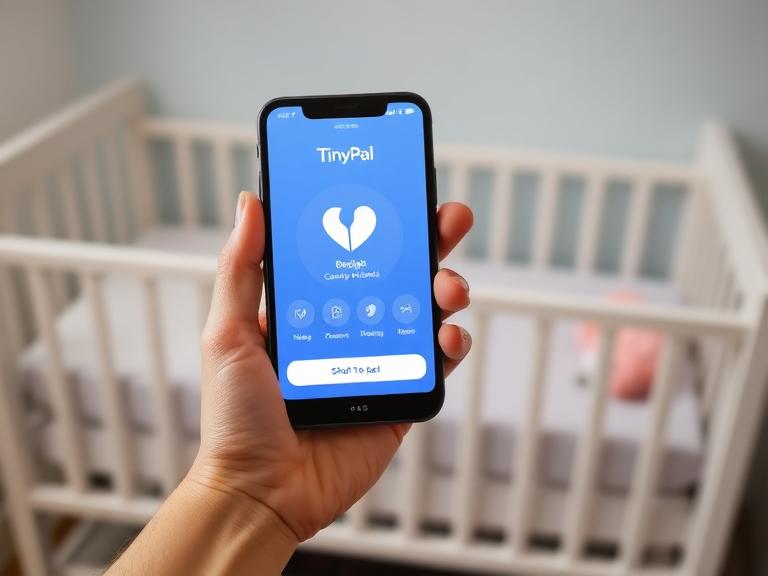
Food chaining can be overwhelming to manage manually. Tracking the sensory properties and the number of exposures for each new food is a full-time job. TinyPal‘s app takes the guesswork out of Food Chaining.
- Chain Generation: Based on your child’s accepted foods, our AI generates personalized, manageable food chains.
- Exposure Tracking: The app automatically tracks exposure and suggests when you are ready for the next link in the chain.
- Bite-Sized Action: Get guidance that fits into your nap times and meal prep—making advanced strategies like food chaining doable for busy parents.
Ready to gently expand your child’s diet and end the mealtime stress?
